
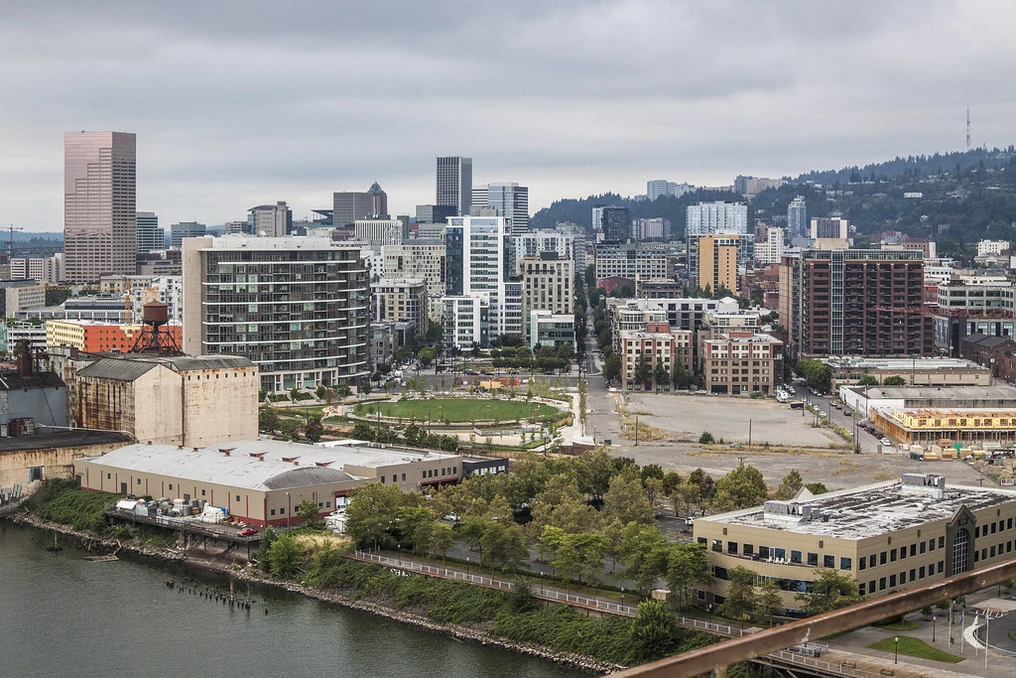
The Short Answer for Future Pearl District Residents
If you’re moving into a Pearl District condo, three things matter more than the rest. Building rules, parking permits, and freight elevator scheduling. Get ahead of all three before move day or your timeline collapses fast. The Pearl is the most rewarding neighborhood in Portland to live in. It’s also the most logistically demanding one to move into.
Most people underestimate the prep work. A standard residential move runs on the homeowner’s schedule. A Pearl District condo move runs on the building’s schedule, the city’s schedule, and the freight elevator’s schedule. None of those flex for you. The earlier you start, the smoother the day will be.
Every Pearl District Building Has Its Own Rules
The Pearl is built around luxury high-rises and converted warehouse lofts. Each building runs its own move-in protocol, and the protocols are not similar.
Plenty of Pearl buildings have published move-in rules. The Casey, The Metropolitan, The Henry, and The Encore are examples. So are Cosmopolitan on the Park, Waterfront Pearl, The Pinnacle, Vista North Pearl, and The Strand. Most require a certificate of insurance from your mover. Many require a 4-hour freight elevator reservation, booked weeks ahead. Some restrict moves to weekdays only.
Common requirements across most Pearl buildings include floor pads, wall guards, and a concierge sign-in. The service entrance is often required rather than the main lobby. Damage to common areas is the building’s problem only on paper. In practice, it becomes yours through deposits and HOA fines.
Your building manager is the single most important person to talk to before move day. Get the rules in writing.
Freight Elevator Reservations Are the Bottleneck
Most Pearl District high-rises have one freight elevator. One. That elevator handles every move in and every move out for the entire building.
Reservations are typically 4-hour windows. Some buildings cut that to two. The window starts when the elevator gets padded and ends when it’s stripped down. If your crew arrives late, the clock is still running.
Book the reservation 2 to 4 weeks ahead during peak moving season, which runs May through September. Off-season weekday slots can sometimes be had a week out. Weekends are competitive year-round.
If your move runs over the window, the next resident waiting is locked out of their own move. Some buildings charge penalty fees. All of them remember the resident who caused the problem.
This is the single biggest reason to hire experienced movers for a Pearl District condo. A trained crew finishes inside the window. An untrained one does not.
Parking and Loading in the Pearl Is Its Own Problem
The Pearl District covers 120 city blocks north of downtown Portland. The streets are a numbered grid with one-way patterns and limited curb space. Trucks compete with the Portland Streetcar on NW 10th and 11th. They also compete with bike lanes, construction zones, and pedestrians.
Some buildings have loading docks or designated service entrances. Many do not. If your building doesn’t have a dock, you’ll need a Temporary Street Use Permit from PBOT.
PBOT permits for moving trucks cost $76 to $145 depending on duration and signage. Apply at least 5 to 7 business days ahead. Signs must be posted 72 hours before the move to be enforceable. If signage isn’t posted in time, anyone can legally park in your spot.
The Pearl is a high-permit area according to PBOT. Skipping the permit risks fines and towing. You also risk your truck parking three blocks away while the crew walks your couch through the rain.
Construction in the Pearl is constant. Verify access to your building one week before the move. Construction zones, lane closures, and detours change weekly.
What Pearl District Condos Are Actually Like to Move Into
Many Pearl buildings are converted warehouse lofts. They have original brick walls, exposed steel columns, polished concrete floors, and oversized industrial windows. The aesthetic is part of why people choose the neighborhood. The aesthetic is also why a casual move-in can damage something irreplaceable.
Floor protection is not optional. Brick, original hardwood, and polished concrete all scratch, scuff, and chip easily. Damage charges from buildings run real money.
Doorways in converted lofts can be narrower than newer construction. Ceilings often run 10 to 14 feet. That helps with tall pieces but adds breakage risk during disassembly and reassembly.
Building elevators have weight and dimension limits. Confirm those before you commit to a 9-foot dining table or an oversized sectional. Some Pearl buildings have units that physically cannot accommodate pieces that fit anywhere else.
The Pearl District Buildings We Move People Into Most Often
Each building has its own quirks. Here’s what to know about the most common ones.
The Casey. Strict insurance requirements. COI must be filed days in advance. Concierge oversight is constant.
The Metropolitan. One of the tallest in the Pearl. Weekday-only moves at some times of year.
The Henry. Powell’s-adjacent. Street access can be tight during weekend tourist hours.
The Encore. Converted warehouse loft. Old freight elevator with weight limits worth confirming.
Cosmopolitan on the Park. Tall building, formal protocols, freight elevator strictly scheduled.
Waterfront Pearl. Two towers with separate freight elevators. Riverfront access logistics differ by tower.
Vista North Pearl, The Pinnacle, The Strand. Newer construction. Smoother logistics, modern freight elevators, standard COI requirements.
How Our Crews Plan a Pearl District Move
The smart technology estimate captures the building name, the unit floor, the freight elevator location, and the parking situation. The route is built around the freight elevator window, not the other way around.
We pre-call the building to confirm the move-in window. The COI goes to the building before move day. The PBOT permit, if needed, is filed ahead.
The crew arrives with floor pads, wall guards, blanket-wrapped furniture, and a load plan that fits the elevator dimensions. The crew lead coordinates with the concierge or building manager on arrival.
Everything is timed against the freight elevator booking. Hourly billing means we have no incentive to slow-walk your move. The faster the job ends, the better for everyone.
Our local moving services are built around how Pearl District moves actually work. If you’re hiring packing on top, our packing services finish the prep so the load itself is fast.
Plan the Building, Then Plan the Move
The Pearl District is the most rewarding neighborhood in Portland to move into. The galleries, the restaurants, the walkability, the Willamette views are all worth the extra logistics. But the move itself is its own project. Building rules, parking permits, and freight elevator timing all need to be locked in before the truck rolls.
A real Portland moving company handles the paperwork side, not just the heavy lifting. That’s the difference between a smooth move-in day and a building manager you’ve already disappointed.
Ready to Plan Your Pearl District Move?
Our Portland movers know every Pearl District building and what it takes to move in cleanly. As America’s Favorite Local Movers, we’ll handle the freight elevator booking, the COI, the permit, and the crew.
Call us today at (503) 966-8220 or 1-800-926-3900 for a same-day estimate.
Prefer to start online? Request your free estimate.